
Why Early Career Talent Strategies Fail After Launch and How to Realign Them for Long Term Impact
Many organizations invest heavily in an early career talent strategy with strong intentions, structured onboarding, and leadership support. Yet months after launch, momentum fades. Programs lose clarity, outcomes weaken, and alignment disappears. If you are evaluating how your strategy performs today, now is the time to reassess and rethink long term direction.
Early talent initiatives often begin with enthusiasm but struggle with sustainability. The real challenge is not designing programs. It is maintaining relevance as business needs, workforce expectations, and organizational priorities evolve over time.
An effective talent development strategy extends far beyond onboarding or graduate hiring cycles. Long term success depends on continuous alignment between learning, performance, and organizational outcomes rather than isolated program delivery.
Organizations typically expect early career programs to build future leaders, accelerate productivity, and strengthen retention. These expectations create pressure on program teams to deliver measurable value quickly while still supporting developmental learning experiences.
Common expectations include:
When expectations remain undefined or unrealistic, strategies lose focus soon after implementation.
Many strategies succeed during planning because assumptions remain theoretical. Execution introduces operational complexity, competing priorities, and inconsistent stakeholder involvement that weaken the original vision.
Typical execution gaps include:
Without adjustment mechanisms, the strategy slowly drifts away from its intended outcomes.
Failure rarely happens suddenly. Instead, small structural issues accumulate until the talent development strategy no longer delivers meaningful impact.
Early career programs sometimes operate independently from business strategy. When leadership cannot connect talent outcomes to organizational goals, support gradually declines and investment justification becomes difficult.
Signs of misalignment include:
Alignment ensures development contributes directly to organizational performance.
Many organizations launch programs as projects rather than evolving systems. Once implementation ends, continuous improvement stops, causing stagnation.
Common challenges include:
A talent strategy must adapt continuously to workforce changes.
Ownership often shifts or disappears after rollout. Managers, leaders, and HR teams may assume others are responsible for maintaining program success.
This leads to:
Shared ownership strengthens long term sustainability.
Without clear metrics, organizations cannot understand whether development efforts produce real value. Measurement gaps prevent informed decision making.
Important measurement areas include:
Data enables strategy refinement rather than assumption-based decisions.
Recognizing early warning signs allows organizations to realign before programs fail completely. Declining effectiveness usually appears gradually through behavioral and operational signals.
Participants disengage when development feels disconnected from career growth. Engagement drops when learning lacks relevance or visibility within career pathways.
Warning indicators include:
Engagement reflects perceived value.
Managers play a critical role in translating learning into performance. When they disengage, development becomes theoretical rather than practical.
Common causes include:
Manager enablement directly influences program success.
A strong early career talent strategy connects learning with measurable workplace outcomes. When performance remains unchanged, strategy alignment must be reassessed.
Indicators include:
Learning must integrate with real work experiences.
Realignment does not require rebuilding programs from scratch. Instead, organizations must reconnect strategy components with evolving business needs and learner expectations.
Start by reassessing how development supports business priorities. Alignment restores leadership confidence and clarifies program purpose.
Key actions include:
Clear alignment strengthens organizational relevance.
Feedback ensures strategies evolve based on real experiences rather than assumptions. Continuous listening improves responsiveness and engagement.
Effective feedback sources include:
Regular feedback enables rapid improvement cycles.
Managers require tools and guidance to support early career development effectively. Without enablement, learning remains isolated from daily work.
Organizations can support managers through:
Manager involvement drives behavioral change.
Modern talent development strategies rely on analytics to guide improvement. Data helps identify trends, gaps, and opportunities for refinement.
Useful data practices include:
Evidence based decisions improve credibility and outcomes.
Sustainability requires systems thinking. Successful organizations design strategies that evolve alongside workforce and business transformation.
Participants stay engaged when development connects clearly to future opportunities. Career visibility motivates continuous learning.
Effective integration involves:
Career alignment strengthens retention.
Early career strategies succeed when responsibility extends beyond HR. Cross functional collaboration ensures broader organizational commitment.
Shared ownership may include:
Collaboration embeds strategy into organizational culture.
Rigid programs struggle in changing environments. Adaptive frameworks allow continuous evolution without complete redesign.
Adaptability can be achieved through:
Adaptable strategies remain relevant longer.
LDP Connect is the community of professionals who lead, manage or support early career talent development programs. With an active membership of over 400, we have served members with research, tools and events since 2012. Join a network focused on shared learning, practical insights, and continuous improvement in early career development practice.
We help practitioners exchange real experiences, benchmark strategies, and stay informed about evolving talent development approaches across industries and organizational contexts.
No organization develops talent strategies in isolation. External perspectives help teams identify blind spots and accelerate innovation through shared knowledge.
Peer learning allows organizations to compare challenges and solutions across industries. Exposure to diverse experiences helps refine strategy decisions faster than internal experimentation alone.
Benefits include:
Shared learning enhances strategic maturity.
Research communities provide evidence-based insights that strengthen decision making. Continuous learning ensures strategies evolve alongside workforce trends.
Organizations benefit from:
External learning supports long term effectiveness.
Launching an early career talent strategy is only the beginning. Sustainable success depends on alignment, adaptability, measurement, and shared ownership. Organizations that continuously reassess their talent development strategy create stronger pipelines, higher engagement, and meaningful long-term impact.
The goal is not perfection at launch, but continuous evolution supported by data, feedback, and collaboration. Realignment transforms struggling programs into strategic assets that grow alongside organizational needs.
Organizations can strengthen early talent development programs by clearly defining business goals, aligning learning outcomes with organizational priorities, and establishing measurable success metrics from the start. Regular evaluation, leadership involvement, and structured feedback loops help ensure programs continuously evolve and deliver meaningful results.
ROI can be measured through both short-term and long-term outcomes. Short-term metrics include skill development, participant engagement, and satisfaction levels. Long-term indicators often include employee retention, promotion rates, leadership readiness, recruiting success, and performance comparisons between program participants and external hires.
Key risks include participant turnover, perceptions of favoritism among non-participants, and inconsistent program quality. Organizations can mitigate these risks by involving tenured employees as mentors, ensuring transparency in program goals, and maintaining high program standards that positively influence internal culture and employer branding.
Successful programs involve the broader organization by creating mentorship opportunities, leadership roles, and recognition systems for experienced employees who support participant development. This inclusive approach strengthens collaboration, prevents “us-versus-them” dynamics, and reinforces a shared learning culture.
Alignment ensures the program directly supports organizational priorities such as leadership succession, culture transformation, diversity goals, or capability building. When success outcomes are defined upfront and tied to strategic objectives, organizations can more effectively evaluate impact and sustain long-term program value.
They often fail due to weak business alignment, lack of ownership, missing measurement frameworks, and limited adaptation after implementation. Strategies must evolve continuously to remain effective.
Most organizations benefit from reviewing strategies annually, with quarterly performance check ins to evaluate engagement, outcomes, and alignment with business priorities.
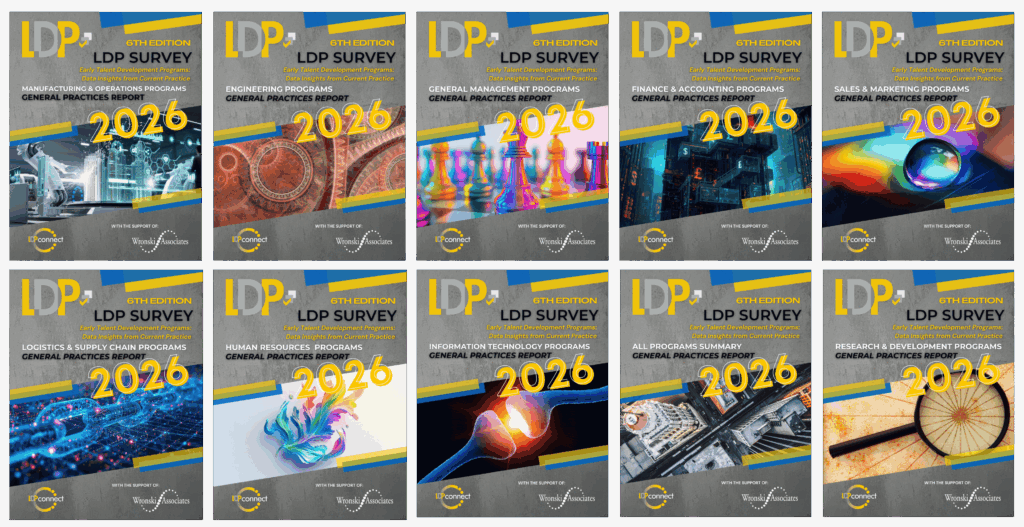
Rention rates, NPS scores, Diversity metrics
Curiculum elements, Program structure & more!
From 177 early talent development programs
Across 94 organizations and 9 functional areas

New applications are typically reviewed within an hour of submission. You'll receive an email notification shortly.