
Building an early talent program is one of the most valuable investments an organization can make to prepare for future workforce needs. A well-designed program helps identify high-potential talent, develop future leaders, and create a sustainable pipeline of skilled professionals.
Building a successful program from scratch requires a thoughtful strategy that aligns recruitment, development, mentoring, and career progression with long-term business goals. By taking a structured approach, organizations can attract promising talent while preparing the next generation of leaders to meet evolving business needs.
As industries continue to evolve, organizations need talent strategies that support long-term growth. Exploring proven approaches to early talent development can help program managers build scalable initiatives that strengthen talent pipelines and drive lasting organizational success.
An early talent program creates a strong foundation for long-term workforce planning. Rather than scrambling to fill critical roles as needs arise, organizations can intentionally develop emerging talent, build institutional knowledge, and create a steady pipeline of future leaders.
Over time, organizations often see measurable improvements in areas such as:
Organizations that invest in structured talent development often experience greater workforce stability and stronger internal mobility. When employees see clear opportunities to learn, grow, and advance, they’re more likely to stay engaged and build long-term careers within the organization.
Once you’ve established the business case for investing in early talent, you’ll begin building a program that aligns with your organization’s goals and workforce strategy. While every organization has unique needs, the following steps can provide a practical framework for designing an early talent program that can grow and evolve over time.
Every successful talent initiative begins with clear a clear understanding of the objectives and outcomes it is designed to achieve.
Ask questions such as:
Defining measurable goals helps program leaders align recruitment, onboarding, learning, and performance outcomes with broader business priorities.
Engaging business leaders and key stakeholders early in the planning process helps to ensure the program supports long-term organizational goals and earns the support needed for success.
Early talent programs are designed to identify individuals with the potential to grow, not just candidates with the most experience. Focusing on long-term potential helps organizations build a stronger talent pipeline.
When evaluating early talent candidates, consider qualities such as:
Using assessment tools and data-driven insights can compliment interviews by giving program leaders additional insights into each candidate’s strengths, learning potential, and long-term fit.
Candidates with strong learning agility, curiosity, and adaptability are frequently better equipped to grow and succeed in increasingly complex roles.
Building a sustainable early talent program requires a recruitment strategy that extends beyond filling immediate roles. Rather than hiring reactively, successful organizations should build ongoing relationships with future talent.
Organizations should establish multiple sourcing channels to reach high-potential candidates at different stages of their education and early careers. These may include university partnerships, internship and co-op programs, employee referrals, graduate recruitment campaigns, industry events, and virtual career fairs.
Consistency is important. Recruiting smaller cohort groups annually often produces better long-term results than recruiting only when immediate needs arise.
Employer branding is equally important. Candidates want to understand your organization’s culture, how they’ll be supported throughout the program, and what opportunities exist beyond their first role. Clearly communicating these points can help attract and retain top early talent.
Identifying high-potential candidates requires a selection process that uses multiple assessment methods to evaluate skills, behaviors, and long term potential more effectively.
Consider incorporating a combination of assessment methods, such as:
Using a combination of assessment methods provides a more complete picture of each candidate’s strengths, potential, and program readiness while reducing bias and creating a more balanced selection process.
Establishing standardized evaluation criteria ensures candidates are assessed consistently and fairly, making hiring decisions more transparent and defensible.
Recruitment is only the beginning of the employee journey. A thoughtful onboarding experience sets the tone for the entire program and helps participants transition successfully into their new roles.
A structured onboarding process helps participants build confidence, understand expectations, establish key relationships, and begin contributing more quickly. For many organizations, onboarding extends beyond an employee’s first week, providing support throughout the first several months as participants develop new skills and build professional relationships.
An effective onboarding experience might include:
Employees who experience positive onboarding are more likely to feel engaged, connected to the organization, and committed to long-term success. Providing meaningful support during the transition into your program helps reduce uncertainty and build confidence from the beginning.
No two participants enter an early talent program with the same experiences, strengths, or career aspirations. Personalized learning plans help to ensure that each participant receives the opportunities they need for personal success.
Developing a personalized learning plan takes a nuanced look at your specific program, individual characteristics, and possible career paths. However, all development plans should include:
Learning plans may also include stretch assignments, rotational experiences, mentoring relationships, or cross-functional projects that expose participants to different areas of the business.
Personalized development plans help participants to stay engaged by aligning learning opportunities with both individual career goals and organizational priorities. Organizations that invest in individual development create more meaningful learning experiences while building the capabilities needed for long-term organizational success.
Strong leaders understand how their decisions affect the broader organization. Providing participants with cross-functional experiences helps them develop business acumen, build relationships across departments, and gain a deeper understanding of how different functions contribute to organizational success.
Cross functional experiences may include rotations, shadowing opportunities, collaborative projects, or stretch assignments within functional areas including:
These experiences aren’t simply about exposing participants to different departments, but helping them understand how the organization operates as an interconnected system. As participants gain broader business perspective, they’re better equipped to solve complex problems, collaborate across functions, and make informed decisions throughout their careers.
Development doesn’t happen in isolation. While formal training builds knowledge and skills, meaningful relationships provide the guidance, encouragement, and real-world perspective that help participants grow into confident professionals and future leaders.
A strong support network can include:
These relationships create opportunities for participants to ask questions, navigate challenges, and gain insights they can’t learn in a classroom alone. Regular coaching conversations also help participants reflect on their progress, set meaningful goals, and continue developing throughout the program.
Organizations that intentionally invest in development relationships create stronger support systems, foster greater engagement, and prepare participants to take on increasingly complex responsibilities over time.
A successful early talent program should be measured just like any other business objective. Tracking meaningful outcomes helps program leaders demonstrate impact, communicate results to stakeholders, and ensure the program is meeting objectives.
While participation metrics can help monitor program activity, outcome-based metrics provide a clearer picture of the program’s long-term impact on both participants and the organizations. Ask questions like:
Metrics should also align with the business goals you defined in Step 1. Depending on your organization’s priorities, key performance indicators may include:
Measuring these outcomes provides valuable insight into how effectively the program is developing talent and supporting business goals. Clear, consistent reporting also helps demonstrate the value of early talent programs to executive stakeholders and reinforces the case for continued investment.
The most successful early talent program is continuously improved upon as business priorities, workforce expectations, and organizational needs evolve.
Continuous improvement efforts may focus on:
Small, intentional improvements made over time help keep programs relevant, effective, and aligned with changing business and workforce needs.
In addition to gathering internal feedback, many organizations benefit from benchmarking their programs against peers and learning from industry best practices. Regular evaluation and continuous refinement help organizations attract, develop, and retain the next generation of talent while building stronger leadership pipelines for the future.
Even with a strong foundation, building an early talent program comes with challenges. The most successful organizations recognize these obstacles early and address them proactively, creating programs that remain effective as business needs evolve.
Without visible support from senior leaders, programs can struggle to gain momentum or secure long-term investment. Connecting program goals to business priorities and regularly communicating measurable outcomes helps reinforce the program’s strategic value.
Assignment managers play a critical role in participant development, but competing priorities can make consistent involvement difficult. Providing managers with coaching, clear expectations, practical resources, and ongoing support helps create a more consistent experience for all participants.
Program leaders are often asked to justify continued investment. Tracking meaningful metrics, such as participant retention, internal mobility, leadership readiness, and manager feedback, helps demonstrate the program’s value and identify opportunities for improvement.
Business priorities, technology, and employee expectations continue to evolve over time. Organizations that regularly gather feedback, benchmark against peers, and refine their programs are better positioned to develop strong internal talent pipelines to meet future leadership needs.
Building an early talent program from scratch requires careful planning, collaboration, and ongoing evaluation. The strongest programs align with business strategy, identify high-potential talent, provide meaningful experiences, and create the support systems that participants need to thrive.
As your program matures, success depends on more than following a checklist. It requires a commitment to measuring outcomes, learning from participants and managers, adapting to business needs, and continually refining the experience. Organizations that embrace this mindset build stronger talent pipelines while creating development programs that remain relevant year after year.
Looking to strengthen your program even further? Learn more about LDP Connect and explore additional insights on benchmarking resources, research, and a community committed to building, measuring, and evolving successful early talent programs.
1. What is an early talent program?
An early talent program is a structured initiative designed to recruit, develop, and retain students and early career professionals. Programs often include internships, rotational assignments, mentoring, leadership development, and experiential learning opportunities that prepare participants for long-term success within the organization.
2. Why are early talent programs important?
Early talent programs help organizations build sustainable talent pipelines, prepare future leaders, strengthen succession planning, and improve retention by investing in employee development early in their careers. They also provide organizations with a scalable approach to meeting future workforce needs.3.
3. How do you build a successful early talent program?
Successful programs begin with clear business objectives and a structured recruitment strategy. From there, organizations should focus on selecting high-potential candidates, creating meaningful onboarding experiences, providing personalized learning and cross-functional development opportunities, building strong support networks, measuring outcomes, and continuously refining the program over time.
4. How should program leaders measure success?
Program success should be measured using metrics that align with business objectives. Common indicators include participant retention, internal promotion rates, leadership readiness, employee engagement, manager feedback, learning completion, and time to productivity. Focusing on outcome-based metrics provides a clearer picture of the program’s long-term impact.
5. Why are mentoring and cross-functional experiences important?
Formal learning is only one part of participant development. Mentoring, coaching, and cross-functional experiences help participants apply new skills, broaden their business perspective, build professional relationships, and gain the confidence needed to succeed in increasingly complex roles..
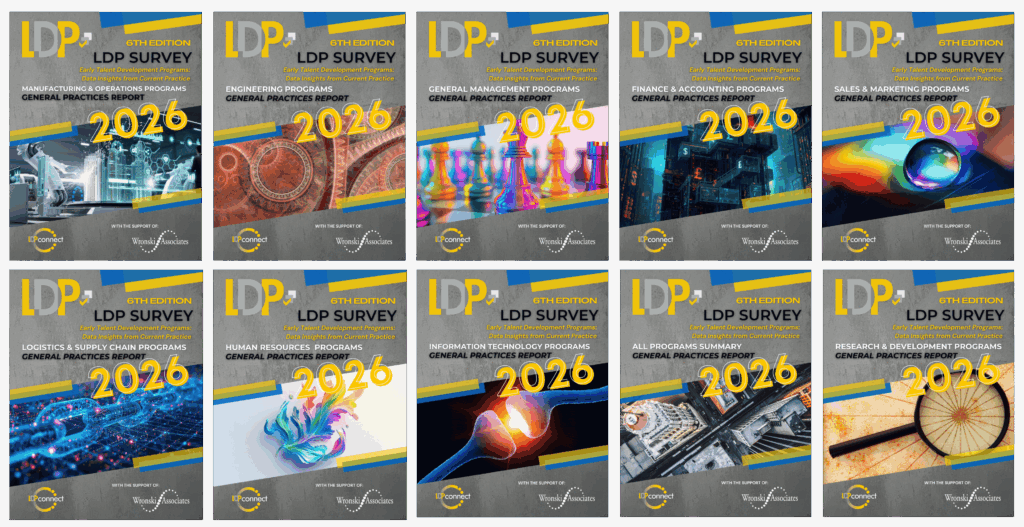
Rention rates, NPS scores, Diversity metrics
Curiculum elements, Program structure & more!
From 177 early talent development programs
Across 94 organizations and 9 functional areas

New applications are typically reviewed within an hour of submission. You'll receive an email notification shortly.