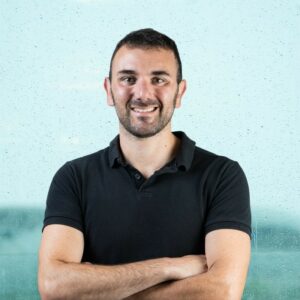
Founder of Aim a Little Higher, Former Youth MP, Olympic Tourch Bearer
Kamal Ellis-Hyman
Shaping Tomorrow’s Workforce Together: What’s missing in the collaboration between business and education to build successful professionals?
Many early talent employers are finding their incoming class overwhelmingly needy, and underwhelming in performance. Interestingly, recent data suggests that Gen Z is aware of its own professional skills gaps, and is feeling unprepared by the education system – perhaps even battling some “imposter syndrome.” How can businesses and schools capitalize on this alignment in perspective to smooth the transition from student to employee, address skills shortages, and deepen opportunity for those in challenging circumstances? Keynote speaker Kamal Ellis-Hyman, is a former Youth MP, an Olympic torch bearer, and the founder of Aim A Little Higher – a company that helps employers bridge the gap from fresh grad to new hire. Join him for an exploration of what’s truly missing in the relationship between employers and schools. Discover what early talent developers can do today to speed the success of their most challenging new recruits, and how to better partner with schools to build a strong workforce for tomorrow.
10:00
Networking Break
10:15
Concurrent Session 1A
Wallis Room
Cloud Technical Residency Manager at Google
Alessandro Sciuto
Hub v. Decentralized? What’s the best location model?
As the reach of our program widens, and operations become more “remote,” we often struggle with how best to “locate” our programs. We love the idea of having people physically together, engaged in a strong community and benefiting from centralized resources. But we also want to meet the needs of stakeholders in diverse areas, with unique challenges and customers that a more distributed model might better address. How do we figure this out? In this session, Alessandro Sciuto, Cloud Technical Residency Manager at Google Cloud, will share his recent experience navigating both models and the interesting findings that have emerged. Learn what to consider regarding your talent pool, competition, diversity objectives and customer needs when deriving your own model. Learn how to build a location framework to mitigate risks and leverage advantages.
10:15
Concurrent Session 1B
Council Chamber
Learning Manager – EMEA Graduate Program (EGP) & Essential Skills at Veolia
Sarah Adams
Re-calibrating program alignment through design thinking
Early talent programs tend to be longer-term strategic solutions, and we need to keep them aligned with the business and the overall talent plan. Performing a realignment can be challenging given all of the moving parts and people involved in a program. How can we be both collaborative and creative in leading appropriate evolution? Sarah Adams, Learning and Development Manager at Veolia Water Technologies & Solutions, recently underwent a program re-build by facilitating a design-thinking approach with her stakeholders. In this session, she’ll introduce the group to the design-thinking methodology, showcase the benefits of using it for program calibration and shed light on how collaboration with program participants, sponsors and assignment managers can lead to deeper community, stronger engagement and a program better prepared for success.
11:15
Networking Break
11:30
Council Chamber
Community Interactive Session
Topic Tables: ‘Idea Snack” discussions
The landscape of managing early talent pipeline programs has changed dramatically over the past twelve months. The best help we get is from each other. What is your most pressing challenge as you navigate the new environment? Where do you need ideas, guidance or validation from your peers? Choose from several “topic tables” for open group discussion in this interactive community session. Stay with the same group, or pop in and out of these moderated intimate chats. Leave with ideas and confidence. Would you like to propose a topic for discussion?
12:30
Lunch
13:30
Concurrent Session 2A
Council Chamber
Early Career Programs Leader at Boeing
Paulina Leszczynska-Sek
Managing senior stakeholders in a multi-geographical, remote environment
Early talent program managers serve many “masters” and often find themselves artfully leading without authority. It’s not easy to think of any other role in business that requires the same level of senior stakeholder management. The diversity, scope and various geographies involved can make the process even more complex. Our programs depend on senior stakeholder support, and they depend on the talent our programs deliver. How do we keep things connected? Join Paulina Leszczyńska-Sęk, Early Career Programs Leader at Boeing, for an exploration of how to influence senior stakeholders in the midst of change and distance. Learn how to build senior stakeholder support while smoothing cultural differences and uniting them around a vision.
Concurrent Session 2B
Wallis Room
Head of Global Talent Attraction, Recruiting & Early Careers at RWE
Madlen Krembel
Director of Talent Practice at Cappfinity
Stephanie Hopper
Generation Z to Generation All: Exploring multigenerational working, the impact on learning, and how to embrace differences to create stronger teams
Join Stephanie Hopper, Director of Cappfinity’s Talent Practice and Madlen Krembel, Head of Global Talent Attraction, Recruiting and Early Careers for RWE as they explore the tension between anecdotal stories and real data in generational practices in a workplace focused on skills. Do Generation Z have unique needs? How can we celebrate the differences in the multigenerational workforce to get the best from everyone and their skills? How can our understanding of each other help to bridge the ‘skills gap’ that so many organisations are now facing, and help us create stronger more engaging graduate development programs? In this session The panel will share Cappfinity’s meta-analysis of all working generations and explore the importance of keeping context apart from experience when onboarding and developing early talent.
14:30
Networking Break
14:45
Council Chamber
"Rapid Fire" Session
A popular session format for LDP Connect events. Participant volunteers share a best practice, learning or challenge with the audience in 7 minutes or less. A quick exchange of actionable ideas, and an efficient introduction to others who may be wresting with the same challenge you’re wrestling with.
15:45
Networking Break
16:00
General Session
Council Chamber
Talent Director at South Pole
Imola Richards
Founder at Talent Lighthouse, and former Head of Early Careers at Jardine Matheson
Anna Champion
HR - Early Talent Global Leader
Andrea Ainsworth
Panel: Polishing the Gemstone - Getting Gen Z "Client Ready"
Are you a little more worried than usual about how your new Gen Z hires are going to “appear” in front of your clients? Whether those clients are external customers, or internal stakeholders who depend on your program, participants need to be able to influence, facilitate and communicate effectively. If their professional presence is less than compelling, so will be their message and the image of your program. Join this session for a discussion on how to help Gen Z become more “presentable” and influential. Discuss tactics used to bridge the seemingly growing gap between fresh grad and effective professional.